In short
- The material is made of fibers finer than 1 denier, usually a blend of polyester and polyamide.
- Dirt and moisture get trapped in the gaps between the fine fibers. That's why you can often clean with it without cleaning products.
- Fabric softener clogs those fibers: afterward, the cloth absorbs much less.
- At Tiseco, these cloths are washed at 30 °C (86 °F), 40 °C (104 °F) or 60 °C (140 °F), depending on the line. The label decides.
What is microfiber, exactly?
It's a fabric woven or knitted from very thin synthetic fibers. A fiber is called a microfiber when it is finer than 1 denier. Denier is the weight in grams of 9 kilometers of yarn. A strand of silk weighs about 1 denier, so these fibers are finer than silk. You'll also see it spelled "microfibre": it's the same material.
Most of the time, it's a blend of polyester and polyamide. The ESSENTIAL microfiber kitchen towels are made of 85% polyester and 15% polyamide, the SILO kitchen towel of 80% polyester and 20% polyamide.
Why does a microfiber cloth pick up so much dirt and moisture?
In microfiber made for cleaning cloths, the polyester and polyamide parts of each fiber are split apart. This creates countless tiny gaps between the fibers. Water, grease and dust get trapped in them. A cloth like this absorbs several times its own weight in water and holds on to more household dust than a cotton cloth.
Not every fine fiber is split like this. In throws and clothing it isn't: there, the fine fiber is mainly there for softness.
What do you use a microfiber cloth for in the kitchen?
- Drying glasses and stainless steel. The cloth leaves no lint and no streaks.
- Drying dishes. A microfiber kitchen towel like RICE or ESSENTIALS dries quickly after washing up.
- Cleaning the countertop and stovetop. The fine fibers absorb grease well. With a damp cloth, you can often remove grease and fingerprints without cleaning products.
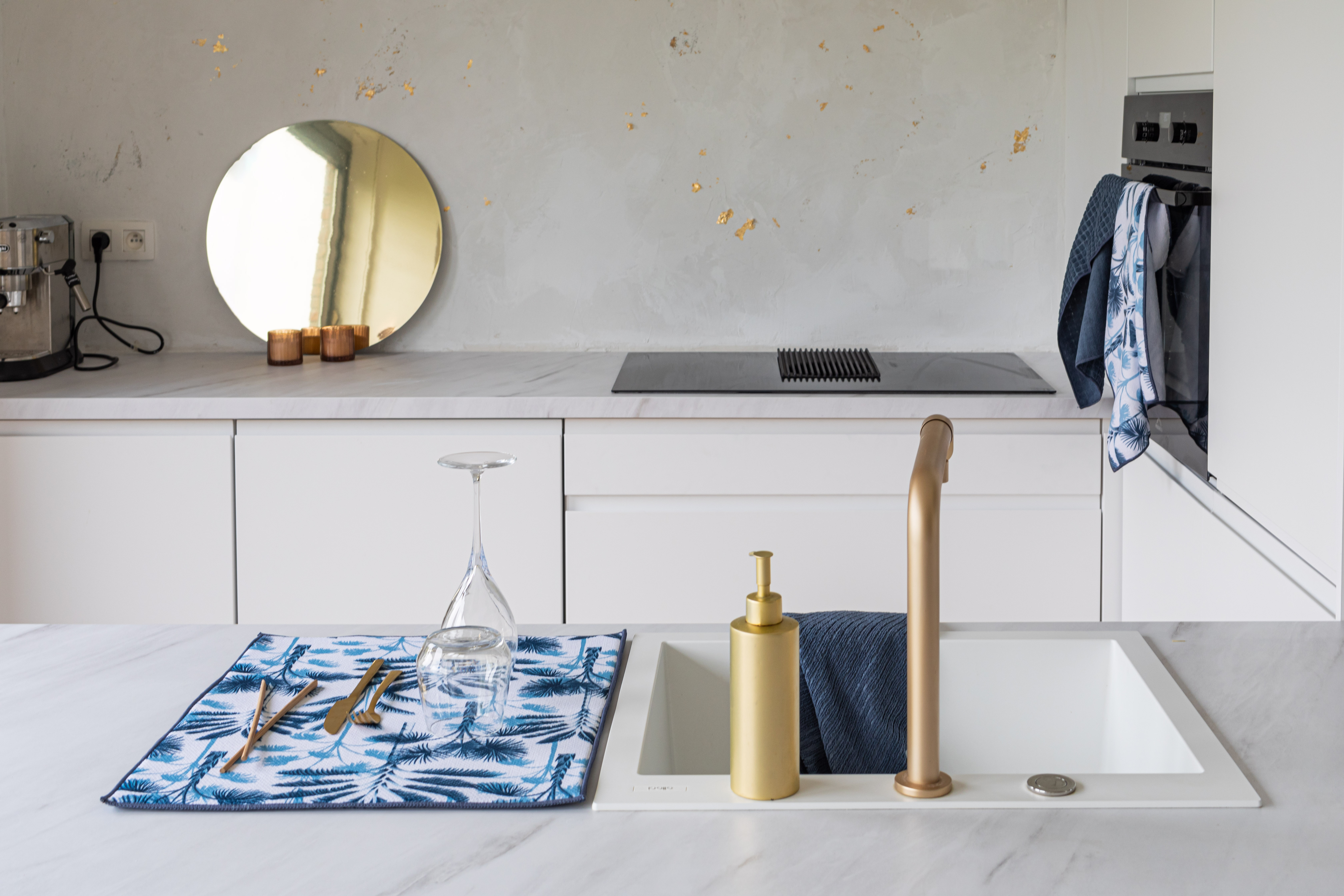
- A drying mat under the dish rack. The ESSENTIAL dish drying mat is made of microfiber and catches the water from your dishes, so your countertop stays dry.
Cleaning: dry for dust, damp for grease
Use the cloth dry to dust: the fine fibers hold on to the dust. Use it damp to remove grease and fingerprints from smooth surfaces like windows, mirrors, tiles, stainless steel and lacquered cabinets.
For floors, use a microfiber floor cloth. For the rest of the house, there's a roll of 50 tear-off cloths. A handy habit: give each room its own color. That way, you never use the toilet cloth on your countertop.
What shouldn't you clean with a microfiber cloth?
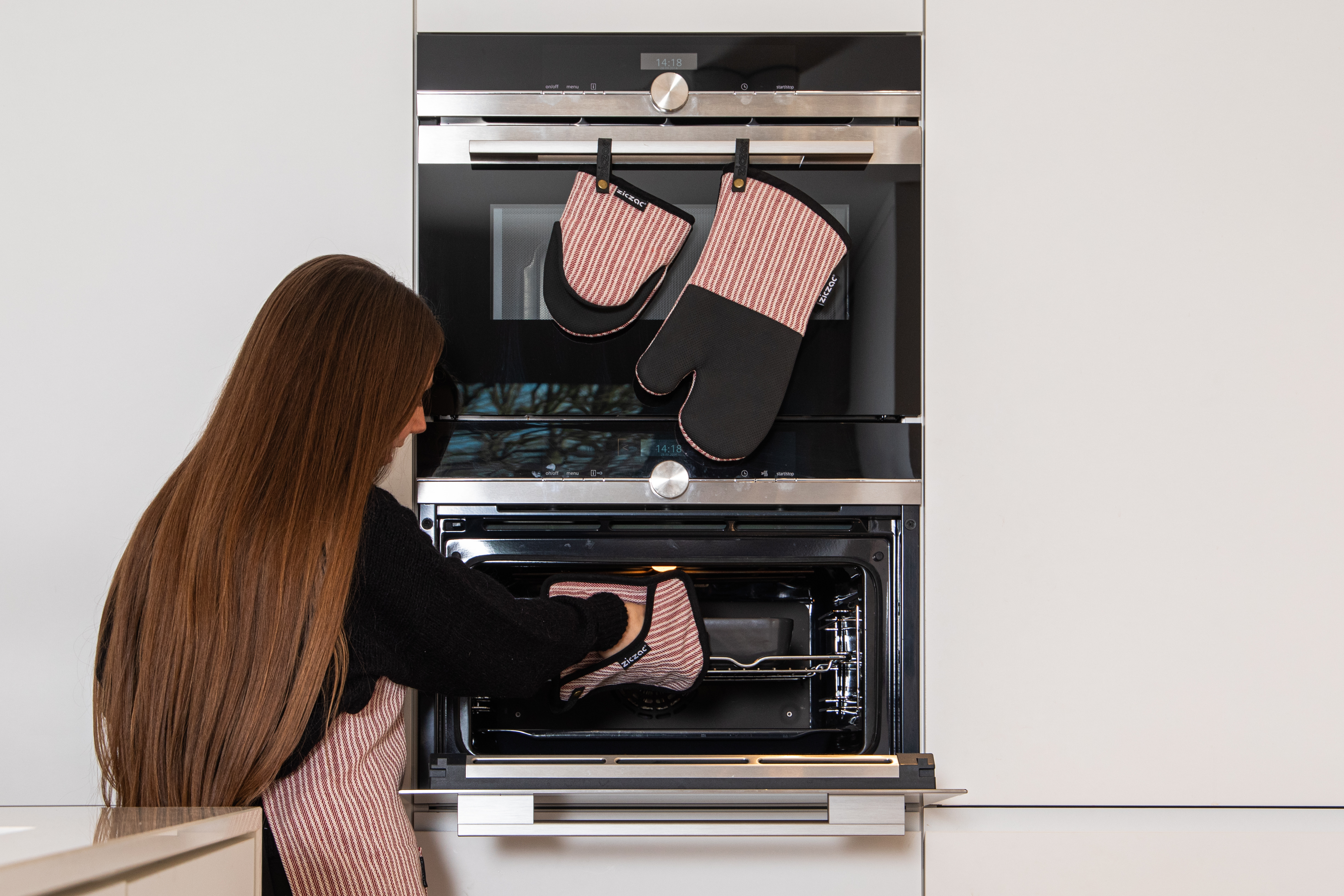
- Hot surfaces. The synthetic fibers can melt. Grab a hot pan with an oven mitt or pot holder, never with a cleaning cloth.
- Rough surfaces. On brick, a patio or rough wood, a brush works better.
A clean cloth won't scratch. Do shake it out if there's sand or crumbs in it.
Microfiber vs cotton: which should you choose?
| Microfiber | Cotton |
|---|
| Material | Synthetic (polyester and polyamide) | Natural fiber |
| Absorbency | Good right away, grease too | Good, but only at its best after a few washes |
| Drying after use | Fast | Slower |
| Lint | No | Yes |
| Wash temperature at Tiseco | 30 °C (86 °F), 40 °C (104 °F) or 60 °C (140 °F), see the label | Usually 60 °C (140 °F), see the label |
| Fabric softener | Never | Preferably not |
| Best for | Glasses, stainless steel, cleaning, quick drying | Drying hands, everyday dishes |
How do you wash a microfiber cloth?
Wash it at the temperature on the label and always without fabric softener. At Tiseco, that temperature varies by line:
- No fabric softener. It leaves a coating on the fine fibers. After that, the cloth absorbs much less water.
- Separately from cotton and other linty laundry. The cloth catches lint from towels and clothing and has a hard time letting go of it.
- Liquid detergent, and not too much. Liquid detergent is gentler on synthetic fabric. Too much detergent stays in the fibers.
- The dryer only if the label allows it. Then on low heat. Too much heat melts or creases the fibers. Air-dried, the cloth dries quickly.
When should you replace a microfiber cloth?
A cloth is worn out when it no longer absorbs water or leaves streaks. Usually, fabric softener or too much heat is the cause. In that case, wash it a few times at the temperature on the label, without fabric softener. If it still doesn't absorb anything after that, replace it.
Fine fibers in throws and bathrobes
Fine fibers aren't only found in cleaning cloths. Microflannel is a soft fabric made of fine polyester fibers, like the COSY DELUX throw and the COSY bathrobe. There, the fibers aren't split for cleaning but brushed for a soft feel. Here too, follow the label: the throw can't go in the dryer, the bathrobe can, on low heat.
Frequently asked questions
Is microfiber the same as polyester? Not quite. It's usually made mostly of polyester, but the fibers are much finer and often blended with polyamide. A regular polyester fabric with thicker, unsplit fibers cleans much less well.
Can you wash microfiber at 60 °C (140 °F)? Only if the label allows it. Tiseco's floor cloths and RICE kitchen towel can be washed at 60 °C (140 °F), the ESSENTIAL kitchen towel only at 30 °C (86 °F). Washing hotter than the label allows can damage the fibers.
What is a microfiber towel? A towel made of fine synthetic fibers instead of cotton terry cloth. It dries quickly, which is why it's often used for sports, swimming or drying your hair. In the kitchen, you use it to dry your hands or dishes, like the 50x50 cm ESSENTIALS towel.
Discover our microfiber kitchen towels and cleaning cloths.